

Interview: Nóra Ihász
Photos: Balázs Levente Berki
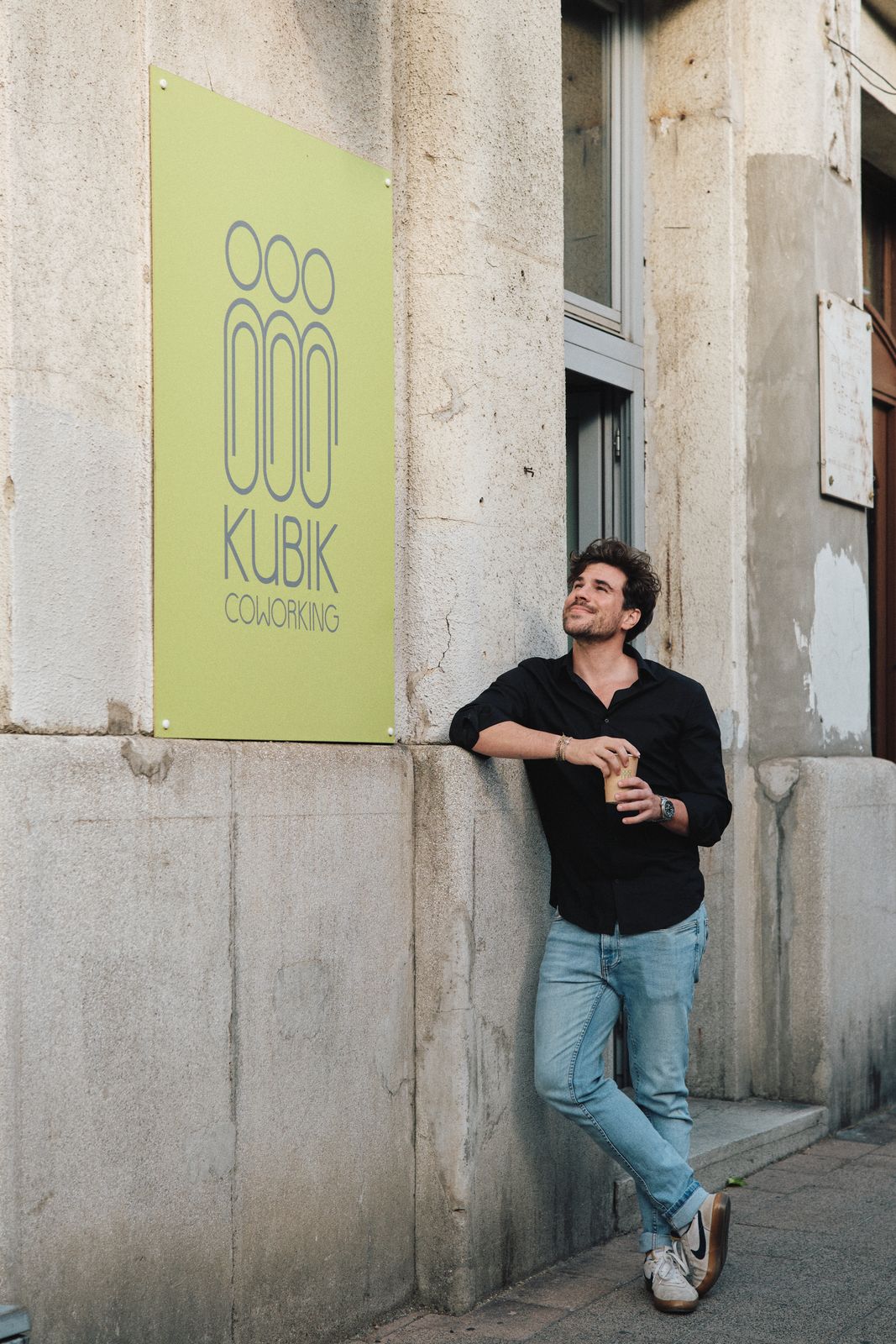
Photos: Balázs Levente Berki
– I had a small home of my own on Böszörményi Road. I am still incredibly grateful for that because it taught me independence and how to rely on myself. I received only minimal financial support and worked alongside my studies. It was a great journey, but also an enormous struggle, because within six months I had to catch up in every subject in order to pass my final secondary school exams.
01
The birth of his first startup idea
– That was when I started learning how to lead a community and a team while also developing myself at the same time. I felt that I had a natural affinity for it. Things went so well that I eventually began organising activities at the coworking space too. In the end, I was offered a job there. I more or less managed the entire office, and we were also awarded an EU-funded project through BME. It was an intense period, but I loved it – Bálint says. – When the project at BME came to an end, I was approached by the Ministry for Innovation and asked to manage coworking spaces and incubators at a national level. In theory, it sounded excellent, but in practice, after about a year and a half, it became clear that the excessive bureaucracy was not for me.

02
Gaining momentum – the creation of International Medical Partners
By this point, he was already moving closer to what would become his current profession, which he discovered thanks to his doctor girlfriend and an old acquaintance. In December 2023, he launched International Medical Partners, a company that helps healthcare professionals find suitable workplaces while also supporting clinics in securing the staff they need.
– We had to build everything from scratch, – says Bálint, who, together with his team, managed to overcome the initial difficulties by the end of the first year. – It really took off. Huge numbers of people started applying for medical positions. There were weeks when we had 30 or 40 applicants, sometimes even 100. That gave the business enormous momentum. By the second year, many things had already started to fall into place. Today, we have a much clearer understanding of details that were less obvious at the beginning: seasonality, how to create recurring monthly revenue, and how recruitment should be structured.
The work of International Medical Partners is focused on detail, with doctors firmly at the centre of the process. – The doctor is the real value, not the clinic. If the doctor does not feel comfortable, it will not work well for the clinic either. There are many small pieces that need to come together: interviews, communication, maintaining contact with the candidate and with the clinic, – Bálint emphasises. Beyond Hungary, the company also recruits internationally and is actively working in countries including Switzerland, Austria, Serbia and Saudi Arabia. The business currently collaborates with private clinics, although in the future Bálint would also be happy to support the work of public hospitals.

03
The role of KUBIK in his working life
– In Hungarian culture, there is often a tendency not to ask each other questions because we are afraid of what might happen if we phrase something the wrong way. We are trying to change that. I feel that a really strong community is beginning to take shape. We also have an event series called Kör, where we get together once a month. I really enjoy working at KUBIK. I usually come in two or three times a week. I love that it is bright, beautiful and has a unique atmosphere – you can almost get lost in it – and I also love being surrounded by kind and open-minded people. I would especially highlight Éva Mocsár’s leadership.
Bálint concludes by saying that, in his view, there are two types of people when it comes to work. One type lives for their work. I try to represent the other type. I strive to make work serve me, not the other way around.